The Billionaire Uranium Bet Nobody's Talking About
Bill Gates, Sam Altman, Mark Zuckerberg, and Jeff Bezos are all making the same bet. It's not AI chips. It's not crypto. It's uranium. Here's why — and what it means for your money with 583 days left on the clock.

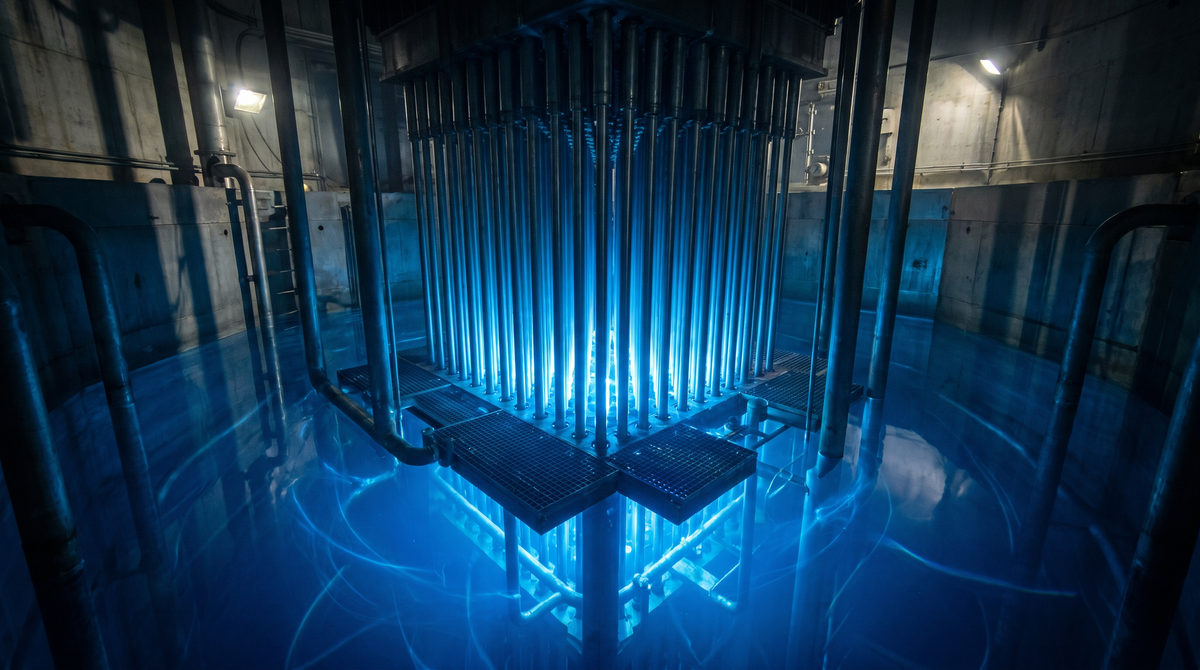
The four richest men in tech are making the same bet. It's not AI chips. It's not crypto. It's uranium.
Bill Gates just put $1 billion of his own money into a nuclear company.
Sam Altman — the guy running OpenAI — chaired a uranium startup for a decade and still owns 4% of it.
Mark Zuckerberg signed contracts for 4 gigawatts of nuclear power in January — enough to light up 3 million homes — to feed his AI mega-campus in Ohio.
And Jeff Bezos is backing nuclear fusion ventures on the side.
These are the four most powerful people in technology. They disagree on almost everything. But they're all making the same bet — and it's not the bet you'd expect.
They're betting on uranium.
Not because it's trendy. Because there is no alternative.
The AI Power Problem Nobody Solved
Here's something the AI hype cycle doesn't mention: every AI model needs electricity. A lot of it.
A single GPT-4 training run uses as much power as a small city. There are currently more data centers under construction in America than there are active ones. And every one of those data centers needs power running 24 hours a day, 365 days a year.
Solar doesn't work at night. Wind doesn't work when it's calm. Natural gas plants face permitting fights that take years. The only energy source that runs nonstop, at scale, with zero carbon emissions — is nuclear.
The tech billionaires did the math. And they all arrived at the same answer.
In January 2026, Meta signed deals with both Bill Gates' TerraPower and Sam Altman's Oklo for a combined 4 gigawatts of new nuclear capacity. Wedbush analyst Dan Ives put it bluntly: "I would be shocked if every Big Tech company doesn't make some play on nuclear in 2026."
Gates' TerraPower already has $2 billion in Department of Energy funding for its first reactor in Wyoming. He expects about a dozen plants to be under construction by the time it goes live in 2031. Oklo — which went public in 2024 and now carries an $11 billion market cap — is starting pre-construction this year.
These aren't press releases. They're signed contracts with construction timelines.
The 590-Day Problem
Now here's where it gets interesting for your money.
The United States banned Russian uranium imports in May 2024. The ban went into effect in August. But because America has virtually no domestic enrichment capacity, Congress built in a waiver system — utilities could keep importing Russian fuel in declining amounts through January 1, 2028.
That's 590 days from today.
The allowed amounts are shrinking every year:
- 2024: 476,536 kg allowed
- 2025: 470,376 kg
- 2026: 464,183 kg
- 2027: 459,083 kg
- After January 1, 2028: Zero. Full ban. No exceptions.
And it gets worse. Russia didn't sit quietly. They retaliated by revoking Tenex's export license to the US — essentially banning themselves before the deadline. Centrus Energy, the main company importing Russian uranium for American utilities, flagged this in an SEC filing as a material risk to operations.
So let's count what we have:
Russia controlled roughly 44% of the world's uranium enrichment capacity. The US depended on Russia for 20-30% of its enriched uranium. The US just cut that off. Russia cut it off from their side too. Congress allocated $2.7 billion to rebuild domestic capacity — but new enrichment facilities take 5-7 years to build.
And Bill Gates, Sam Altman, and Mark Zuckerberg just signed contracts that require the fuel we don't have.
What This Means for Your Portfolio
This isn't a prediction. The ban is law. The date is public. The contracts are signed. The supply isn't there.
The demand side is locked in — Big Tech doesn't cancel contracts because uranium is inconvenient. The supply side is in structural deficit — you can't speed up a 5-7 year construction timeline. And the clock is ticking — 583 days until the waiver system expires entirely.
You don't need to be a geopolitical analyst to see how this plays out. When demand is fixed and supply is shrinking against a hard deadline, the commodity goes up. That's not a thesis. That's arithmetic.
There are a few ways to position:
URNM (Sprott Uranium Miners ETF) gives you diversified exposure to the companies that mine, process, and sell uranium. It's the broadest play on the sector.
Cameco (CCJ) is the blue-chip uranium producer — the Freeport-McMoRan of nuclear fuel. It has long-term contracts and is one of the only Western producers at scale.
Sprott Physical Uranium Trust holds the actual metal. When supply tightens, the trust benefits directly.
A 5-10% allocation is worth considering. Not because uranium is a magic bullet — but because the setup is unusually clear: known demand, shrinking supply, and a date circled on the calendar.
The Bottom Line
Bill Gates invested $1 billion. Sam Altman chaired the company for a decade. Zuckerberg signed 4 gigawatts of contracts. The US government allocated $2.7 billion because they know domestic capacity doesn't exist. And the clock runs out in 583 days.
These people aren't speculating. They're preparing for a reality that most investors haven't caught up to yet.
The question isn't whether uranium matters — they already answered that with their checkbooks.
The question is whether you get positioned before January 2028, or after.
This is what we cover inside EnergyMacro — the specific tickers, entry zones, position sizes, and kill criteria for the energy, uranium, copper, and real-asset trades that most advisors can't or won't recommend. If you want the full playbook, the Black Out Fortune Playbook is available now.
— @RealAssetRebel